ASTRONOMY PASSIONATES TRAINING HUB · "Per aspera ad astra"

All of Astronomy,
Finally in
One Place

There are plenty of astronomy guides and handouts out there, but everything is scattered—handouts in one place, problem archives in another, daily challenges and planetarium tools somewhere else. We combined all of them into one community for Olympiad competitors, astrophotographers, and anyone passionate about astronomy.

◈ 12 THEORETICAL SYLLABUS MODULES ◈ POTD · POTW · POTM ROTATIONS ◈ SEASONAL ASTRONOMY COMPETITIONS ◈ ASTROPHOTOGRAPHY & OBSERVATIONAL LABS ◈ INTERACTIVE 3D PLANETARIUM ◈ 12 THEORETICAL SYLLABUS MODULES ◈ POTD · POTW · POTM ROTATIONS ◈ SEASONAL ASTRONOMY COMPETITIONS ◈ ASTROPHOTOGRAPHY & OBSERVATIONAL LABS ◈ INTERACTIVE 3D PLANETARIUM
From the Problem Archive

Featured Exam Problems
USAAAO 2026 · Q10 · Module T1
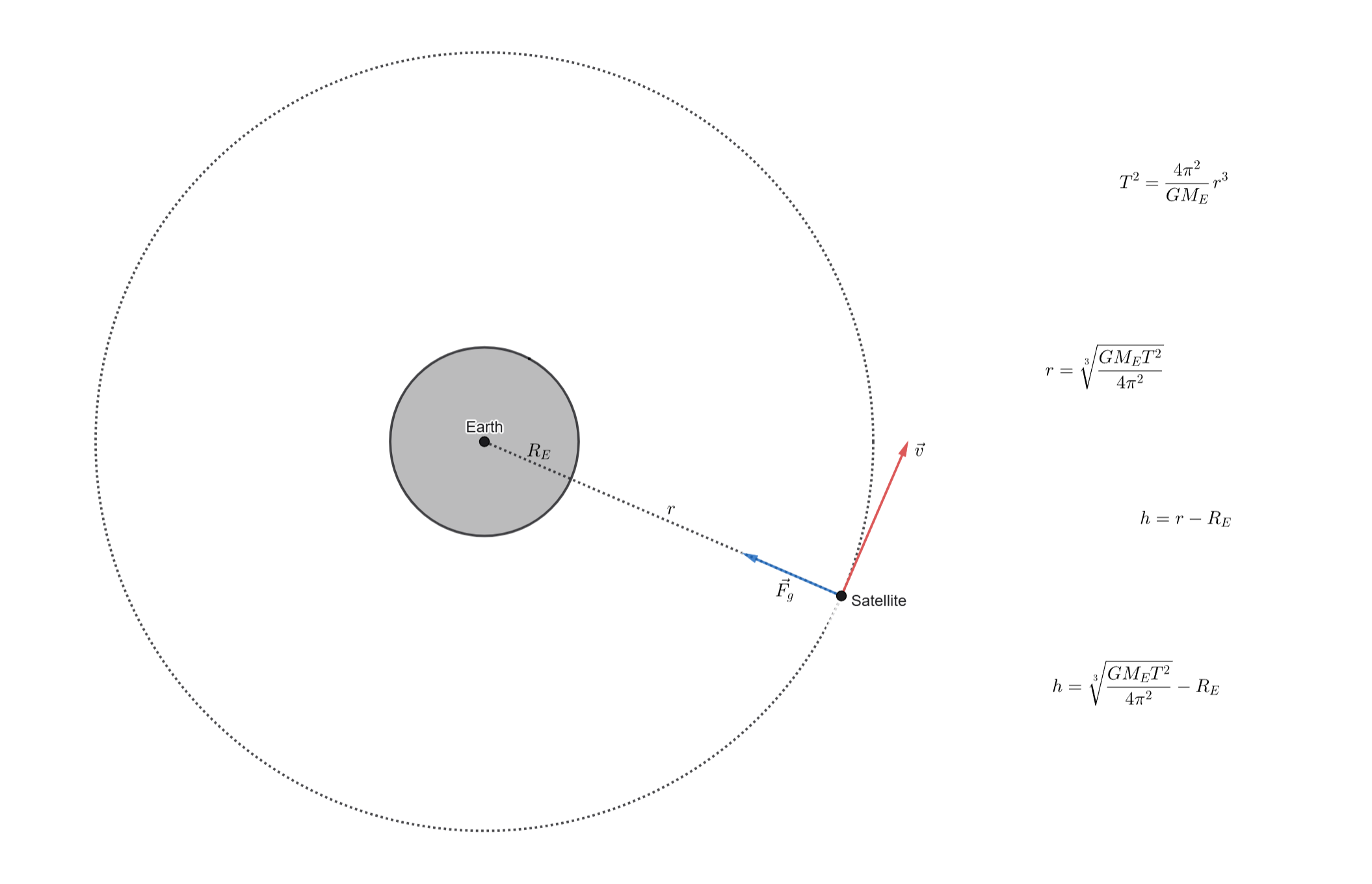
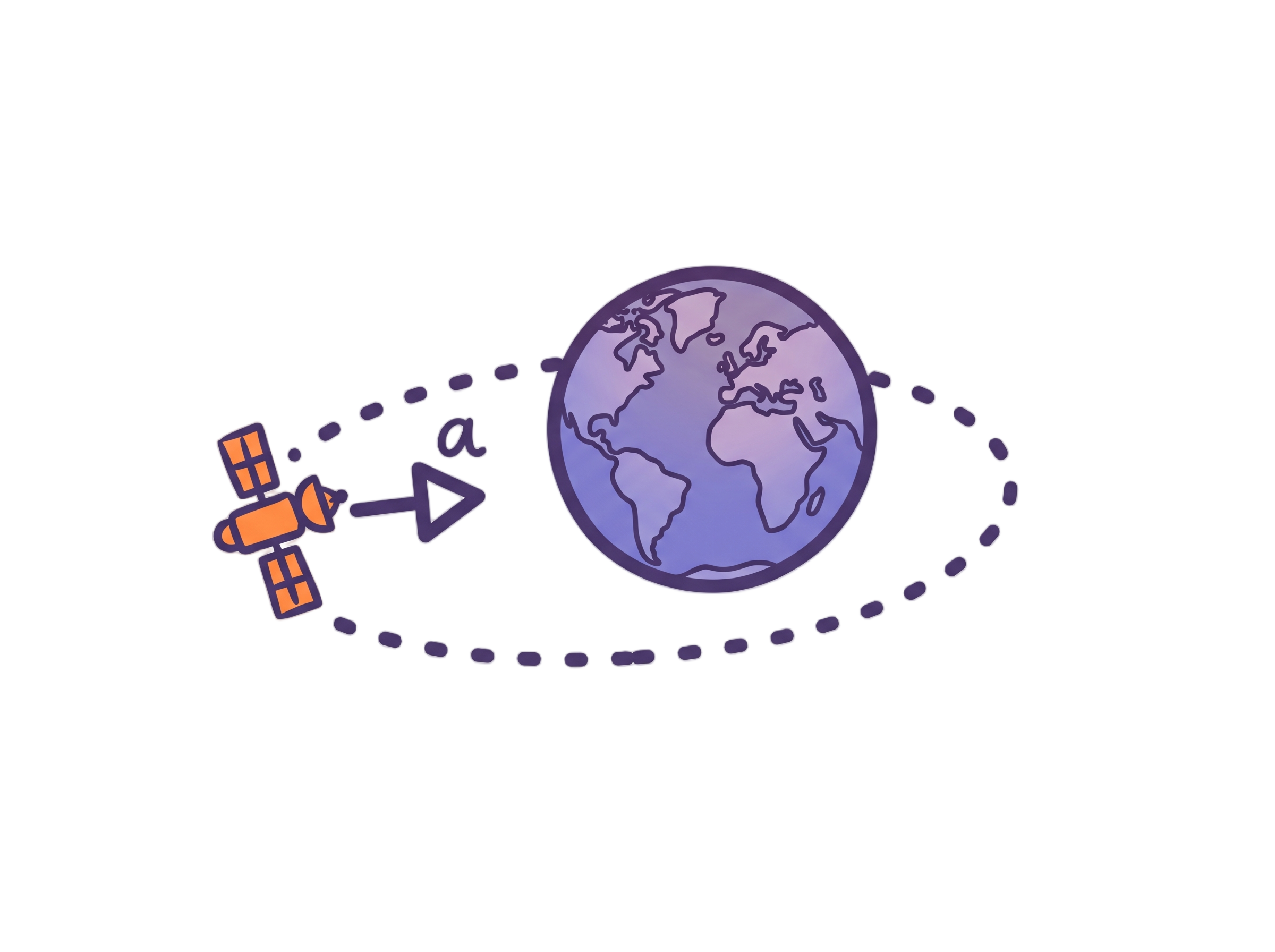
Geostationary Satellite Diagram

Geostationary Satellite Altitude

A small satellite orbits the Earth so it stays directly above a fixed point on the equator. Using \(5.97 \times 10^{24}\text{ kg}\) for Earth's mass and \(6.37 \times 10^6\text{ m}\) for its radius, how far is the satellite from the surface of the Earth? Assume its mass is \(300\text{ kg}\) and an orbital period of \(86164\text{ s}\).
USAAAO 2025 · Q26 · Module T1
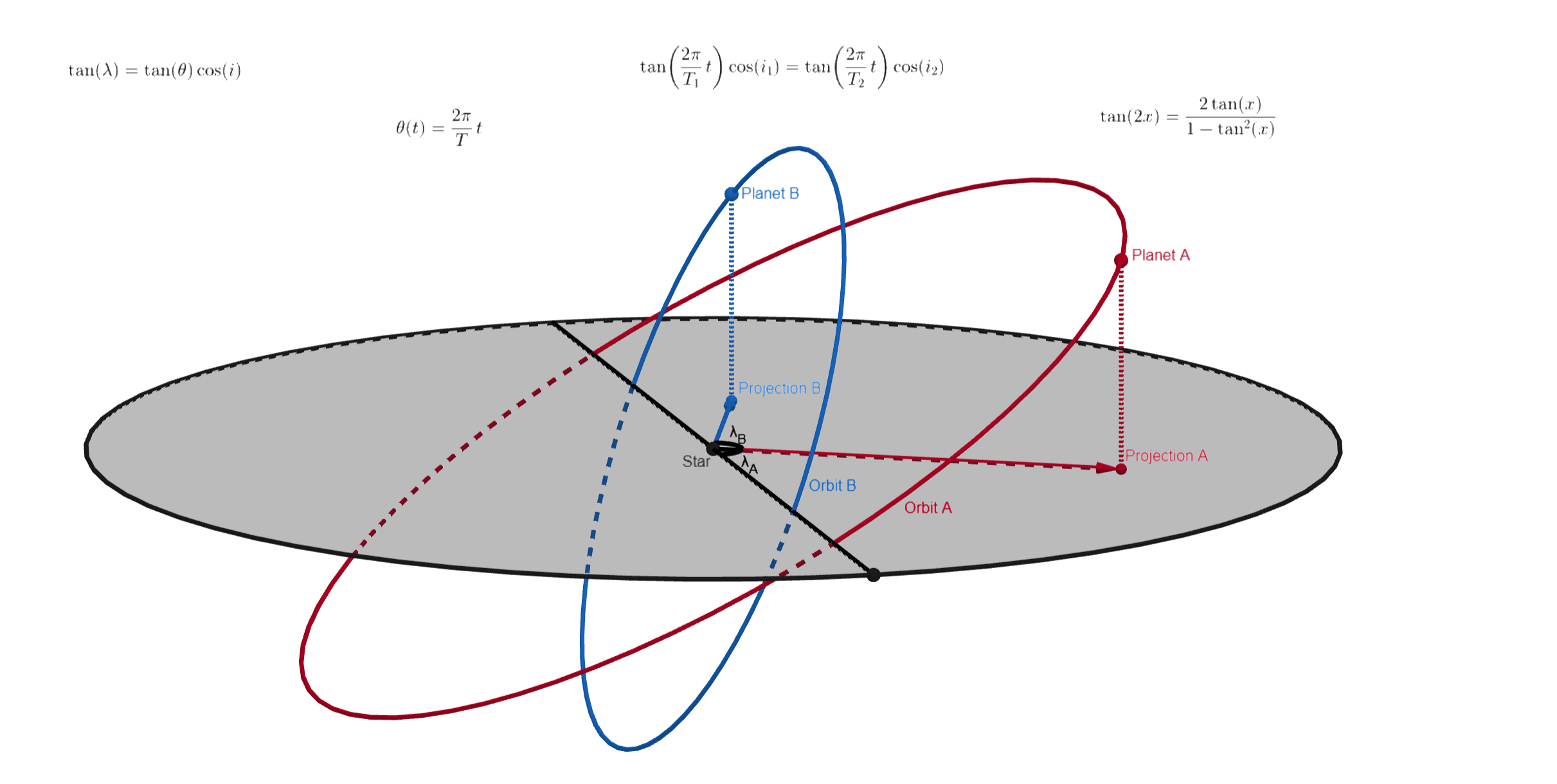
Ecliptic Longitude Diagram

Ecliptic Longitude & Inclination

Two exoplanets, A and B, have circular orbits around the same central star. Their ascending nodes are located at the same ecliptic longitude, and both planets start there at \(t = 0\). How long will it take for the planets to share an equal ecliptic longitude again, given inclinations \(i_1 = 30^\circ\), \(i_2 = 70^\circ\) and periods \(T_1 = 2\text{ yr}\), \(T_2 = 1\text{ yr}\)?
USAAAO 2026 · Q27 · Module T1
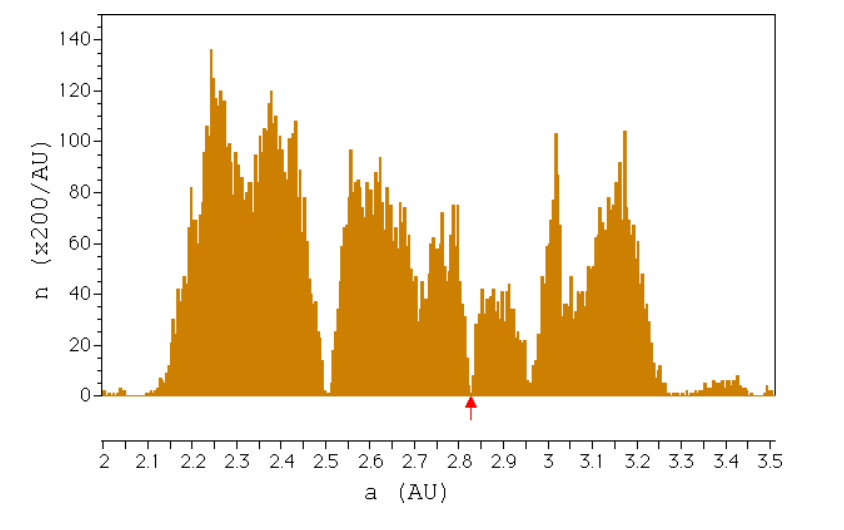
Kirkwood Gaps Histogram

Kirkwood Gaps & Resonance

When plotting the distribution of asteroids in the asteroid belt by their semi-major axis, we see several regions, known as "Kirkwood gaps," where asteroids' orbits are unstable due to an orbital resonance with Jupiter (\(a = 5.20\text{ AU}\)). What orbital resonance is responsible for the gap marked with the arrow?
Everything Under One Roof

Tracks & Modules

Track 01 · 12 Modules
Theory Track

Theory & Handouts

12 structured modules covering celestial mechanics, radiative physics, stellar structure, general relativity, and cosmology—paired with our own handouts.

Track 02 · Data & Plots
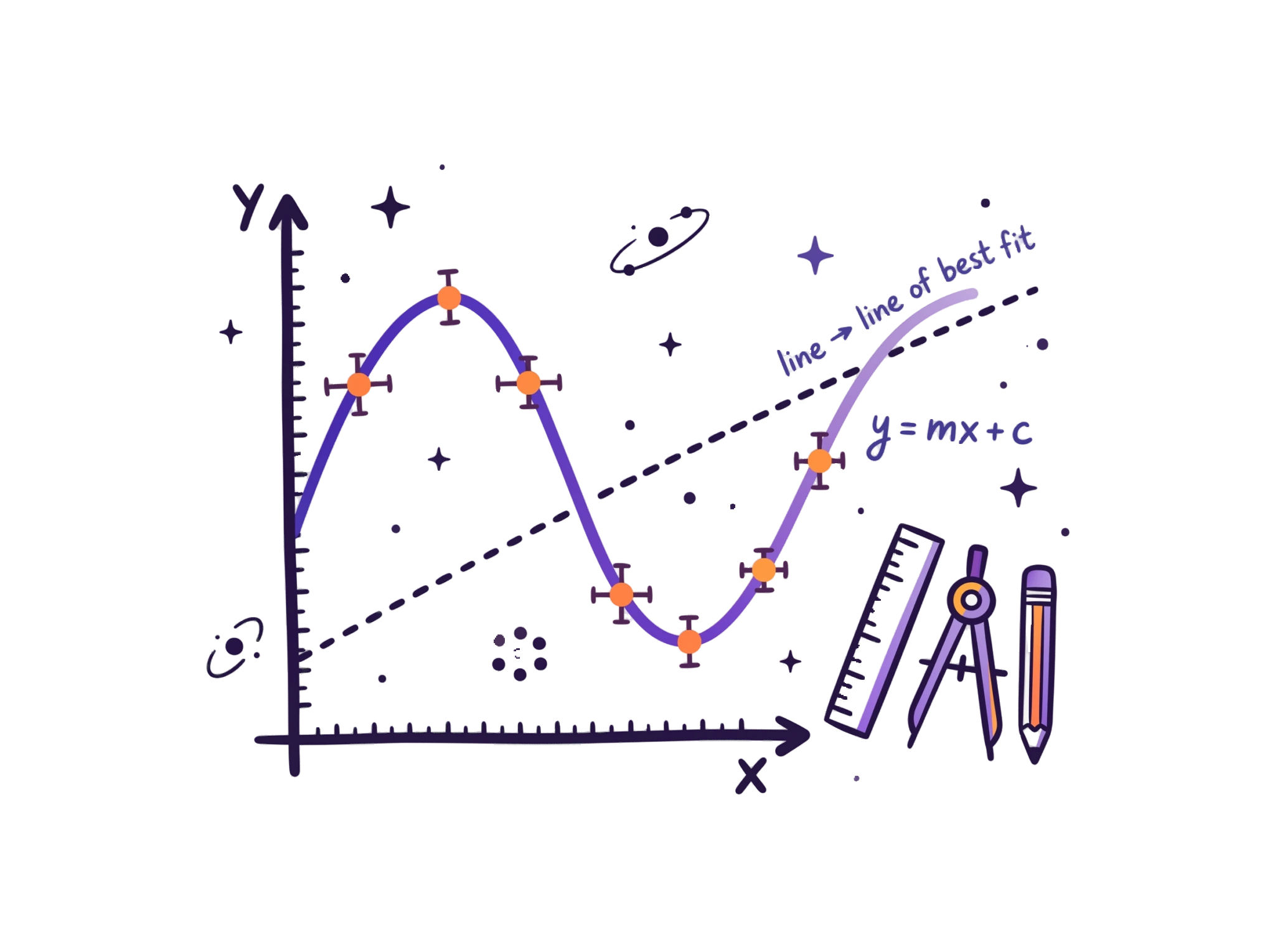
Data Analysis

Data Analysis

Practice plotting, error propagation, linear regression, and working with real light curves and observational datasets.

Track 03 · Naked-Eye
Blind Map

Blind Star Maps

Unlabeled star charts, constellation recognition, deep-sky objects, and coordinate estimation for observational rounds and night-sky sessions.

Track 04 · Instruments
Telescope Practice

Telescopes & Imaging

Optics, equatorial mount alignment, field-of-view calculations, detector plate scales, and practical astrophotography challenges.

More Than Once a Year

Seasonal Competitions & Rotations

Seasonal Format · Autumn 2026

Seasonal Competitions

Most astronomy competitions only happen once a year. We hold seasonal competitions with varied, engaging formats—starting with our 3-Phase Autumn Cup (19 Oct – 1 Nov 2026).

1d · 1w · 4w Cycles

POTD, POTW & POTM

Fresh problems written by our team on a continuous cycle: a new Problem of the Day every 24 hours, Problem of the Week every 7 days, and Problem of the Month every 4 weeks.

Live Sessions · Nov 2026

Supernova Live Courses

Interactive lectures held directly by Matei, Albert, and Mihai—covering celestial mechanics, observational astronomy, and competition problem-solving.

Unified Archive
Handouts + Problems

Instead of jumping between ten different websites, keep your theory handouts, past Olympiad papers, mistake notebook, and formula tools in one workspace.

Active Community
Olympiads & Beyond

Built for both competitive Olympiad students and general astronomy enthusiasts—from theoretical astrophysics to astrophotography and skywatching.

Year-Round Events
Seasonal Cups

Frequent, creative competition formats every season so you don't have to wait a full year to test yourself against other astronomy passionates.